
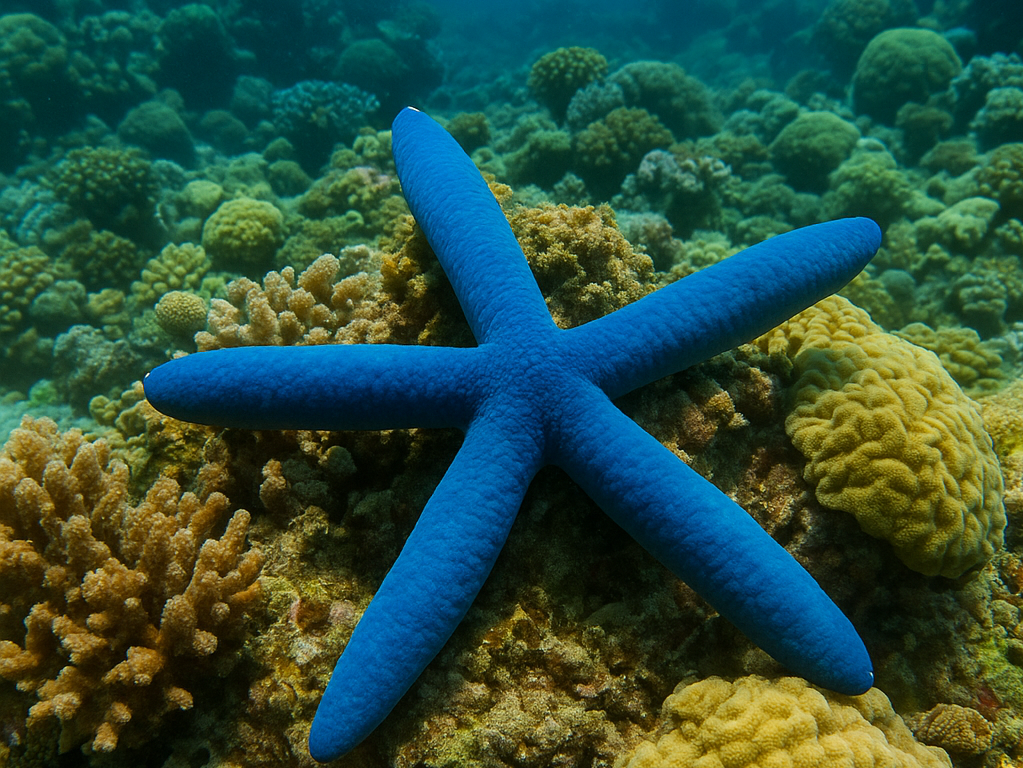
Mission Beach’s Gentle Sea Stars
If you think stingrays and turtles are cool, wait till you meet the stars of Mission Beach — the humble, slow-moving, totally chill sea stars (yes — starfish, but let’s call them sea stars, because “fish” doesn’t quite fit).
Often overlooked, these quiet reef dwellers deserve some attention. They bring calmness, wonder and a little bit of magic to the reefs and tide-pools along the coast.
Image created by G Walton (AI) - Fridays at Three Collection
Yes — Starfish do call Mission Beach reefs “home”
The marine life near Mission Beach — where rainforest meets reef — is famously rich and diverse.
Local reef-tour operators list starfish as among the creatures you might glimpse on a snorkel or dive trip departing from Mission Beach.
That means when the water’s calm and you’re gently exploring coral gardens, rock ledges or shallow reef platforms — keep an eye out. Beneath your fins or under a gentle wave, a sea star might be going about its slow, quiet business.
What Makes Sea Stars Special
Sea stars aren’t flashy. They won’t leap out at you. Instead their power lies in being subtle, mysterious, and completely unlike most reef-fish.
They move slowly, sprawling over rock or coral.
Their arms — sometimes five, sometimes more — make them look like little underwater stars (hence the name).
If you see one stuck to a rock under shallow water, absolutely still … you’ve just discovered one of the reef’s calmest residents.
They’re part of the reef’s quiet backbone: the gentle, patient, slow-motion creatures that help make Mission Beach’s underwater world feel timeless.
A Sea Star Safari — Family Holiday Style
Bringing kids? Sea stars make perfect gentle holiday magic:
Snorkel slowly — glide, don’t splash. Chances are good you’ll spot a sea star hugging the coral or reef rock.
Use a waterproof camera or phone — starfish don’t like flash photography, but natural light with calm water often captures their subtle beauty.
Teach respect: no poking, no lifting, no prying sea stars off rock. They belong to the reef — watch them, admire them, then gently swim on.
Make it a night snorkel with a torch (where safe & permitted): sometimes sea stars are easier to spot under soft torchlight, resting among corals or under ledges.
It becomes less “look at fish” and more “enter a peaceful reef world, listen to the water, see the quiet magic.”
Why Gentle = Important
Reefs around Mission Beach — part of the broader Great Barrier Reef ecosystem — face serious ecological pressures from climate change, invasive species like the Crown-of-thorns starfish, and human impact.
That makes the calm, slow residents like sea stars even more precious. If we snorkel with care — no grabbing, no disturbance — we give these creatures a chance to thrive.
It’s reef-watcher 101: respect, observe, and leave no trace.
Why You’ll Remember Starfish Moments
Because sea stars don’t demand attention.
They don’t leap or splash or chase you.
They just sit.
Quiet.
Steady.
Perfectly still, even when the reef around them pulses with bright fish and fast currents.
Spotting one feels like a secret handshake with the reef. A gentle reminder — even in chaos, there’s calm.
Years from now, you might forget the giant coral or the fastest fish you saw. But you’ll remember the little star-shaped creature, arms spread wide, clinging to a rock in the warm Mission Beach water.
That’s the magic of sea stars.
Planning a visit? Stay at Fridays At Three, located right on beautiful Wongaling Beach.